
After Munch
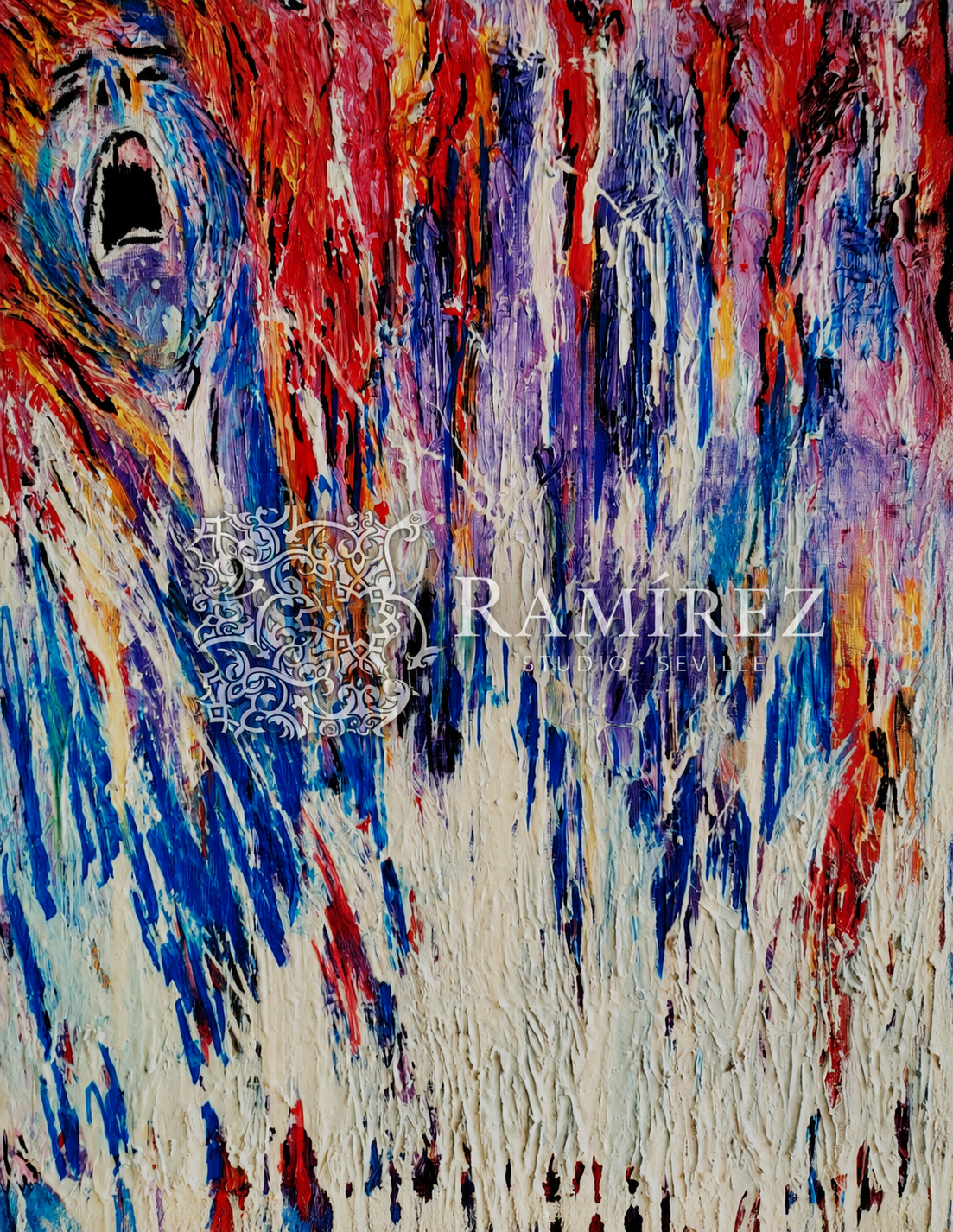
In this work, the reference to Edvard Munch's The Scream serves as a point of departure for a freer and more visceral pictorial exploration. The figure, barely recognizable beneath layers of color and thick impasto, emerges as a tormented presence whose identity seems to dissolve into the very substance of the painting.
The composition concentrates its tension on the left side of the canvas, where an open mouth evokes a scream suspended in time. Yet the emotion does not remain confined to the face; it spreads across the entire surface through a succession of drips, sweeping gestures, and impulsive brushstrokes that transform color into emotional language.
The reds and oranges at the top generate an atmosphere of intensity and conflict, while the blues, violets, and whites introduce a more introspective dimension associated with pain, memory, and fragility. The pictorial matter itself assumes a central role, creating a space in which figure and background merge into a single sensory experience.
Far from being a literal reinterpretation of Munch's work, After Munch proposes a reflection on the persistence of anguish and its ability to transcend periods and artistic languages. The scream no longer belongs solely to the depicted figure; it becomes a vibration that permeates the canvas and finds in painting its most direct form of expression.
The work belongs to the tradition of contemporary Expressionism and gestural painting, understanding the act of painting as a process of emotional externalization in which matter, color, and gesture reveal what words are unable to express.